Rail & Rafter
Overhead and ceiling storage
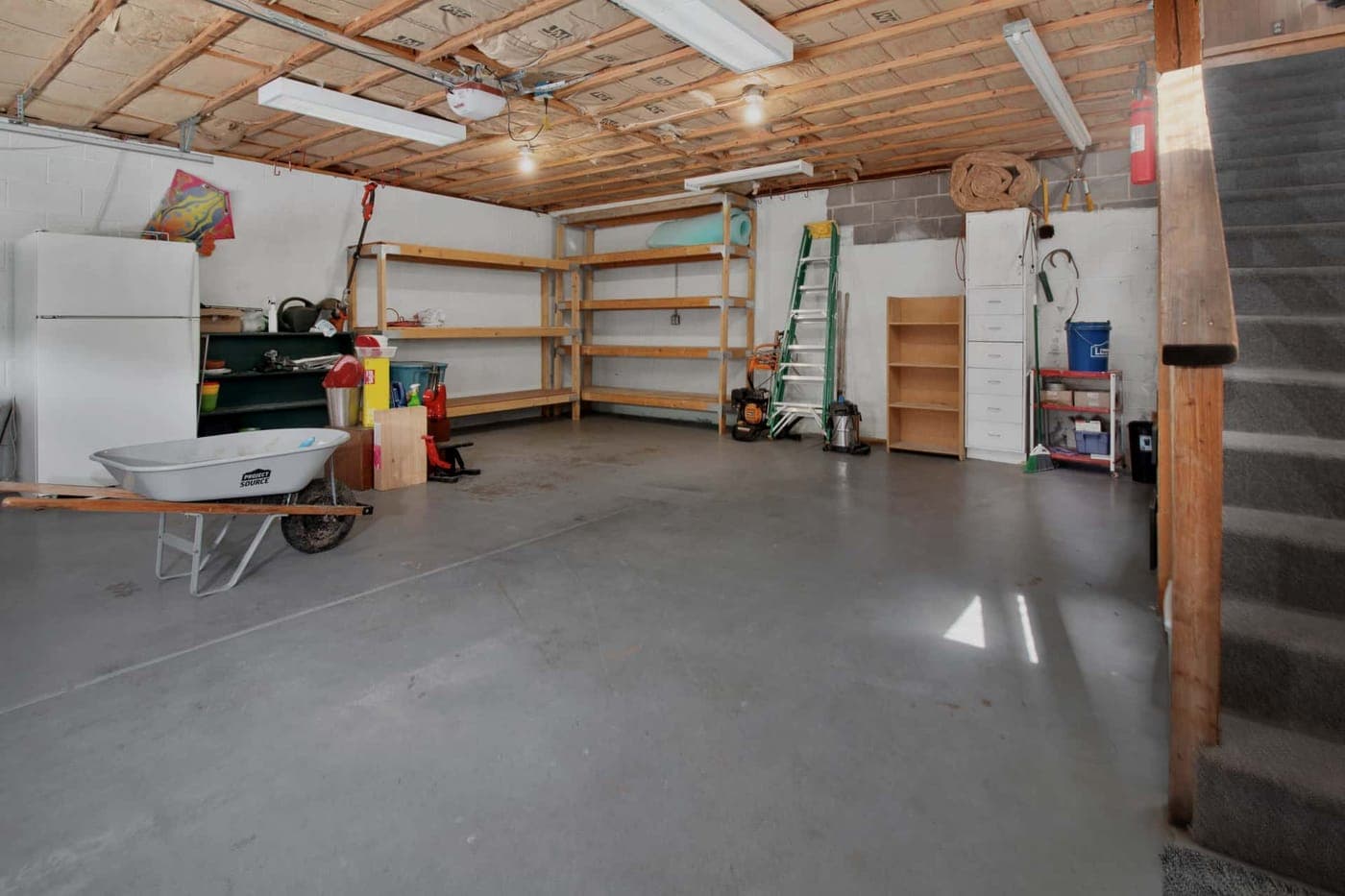
The ceiling buys back more floor per dollar than anything else in a garage. It is also the easiest thing to get wrong, and the mistake is always the same.
If you only read one line
SafeRacks 4 x 8 Overhead Rack
A 12 to 45 inch drop range is the widest published in this category, which makes it the rack that fits both a 7 ft ceiling and a cathedral one. The limited lifetime warranty is the other reason it is here.
Skip it if your garage ceiling is concrete, steel joist, or an engineered I-beam floor system. SafeRacks says in writing not to install into any of those, and that is not a warning to work around.
An overhead rack is the highest-return purchase in a garage. Nothing else converts as much floor into storage for as little money, because the ceiling is space you are already paying for and currently using for nothing.
It is also the category where people most often buy the wrong thing, and the reason is consistent: they buy on the capacity number printed on the box and never check the two figures that actually govern.
The two numbers that decide it
Ceiling drop decides whether you can walk under the rack. Published minimums across the mainstream 4x8 field range from 12 inches (SafeRacks) to 22 inches (FlexiMounts) — ten inches of difference, which on an 8 ft ceiling is most of your remaining headroom.
Joist spacing decides whether the rack can be mounted the way it was designed to be. Standard framing is 16 inches on center and plenty of garages are not standard. FlexiMounts publishes an explicit fit envelope — any spacing up to 24 inches, or exactly 48 if wider — and SafeRacks approaches it from the other side with 27 inch brackets designed to span two joists.
Neither number is on the front of the box, and both take five minutes to check against your own garage. Do it before you order rather than on the ladder.
The thing almost nobody in this category says out loud
The rack's rating and your ceiling's capacity are two different numbers, and the lower one governs. A 600 lb rack does not give your ceiling a 600 lb capacity. A garage framed for an uninhabitable attic without storage is designed for a 10 lb per square foot live load; with limited storage, 20. Both are smaller than people assume.
The complete IRC joist span tables — 2x4 through 2x10, at four spacings, for both load cases — are on how much weight a garage ceiling holds. That is the page to read before you buy anything on this hub.
When overhead is the right answer
Overhead storage is for things that are bulky, light and infrequently needed. That is a narrower profile than it sounds and it is the whole test:
- Holiday decorations — the textbook case. Six flat totes fit on one 4x8 rack, which is most households' entire seasonal store.
- Bins and totes generally — camping gear, spare bedding, keepsakes.
- Kayaks and paddleboards — long and awkward rather than heavy, and the one case where a lifting system genuinely earns its cost.
When it is the wrong answer
Three cases, and they matter because a rack sold into any of them is a bad purchase:
- Anything dense. Tires, hardware, paint, tile. Dense weight concentrated on four brackets is the wrong load for joists framed around a distributed figure. Those belong on heavy-duty shelving, where the slab carries them.
- Anything you need weekly. You will stop climbing for it by about week three and it will end up back on the floor. That belongs on a wall or on shelving.
- Any ceiling that is not timber. Concrete, steel joist and engineered I-beam ceilings are outside what every rack here is designed for. SafeRacks states it in writing.
What it costs, in effort
A standard 4x8 rack on 16 inch timber joists at an 8 ft ceiling is a two-person, two-to-three-hour job with ordinary tools. The genuinely two-person step is lifting the assembled frame into the ceiling brackets.
Budget for decking if your rack requires it — the FlexiMounts GR48F publishes its 600 lb figure as conditional on 3/8 inch plywood or thicker, which you supply. What drives professional installation cost is on installation cost.
Where to start
If your ceiling is 8 ft or lower, start with low ceiling garage storage — the answer there is placement rather than product, and it will save you buying the wrong rack. If your ceiling is fine, start with the joist arithmetic and then the rack ranking. If you are still working out what is going up there at all, start at the mess.
Bikes are the exception to all of it: they hang from two fixings rather than sitting on a deck, and the hoists that do it are ranked on published capacity and pulley ratio in the best ceiling bike hoists.
If you have already narrowed it to two brands, the head-to-heads carry the published figures side by side: FlexiMounts against SafeRacks, FlexiMounts against MonsterRax and SafeRacks against MonsterRax. If you are still deciding whether the ceiling is the right surface at all, FlexiMounts against Husky sets a ceiling rack and a welded shelving unit against each other on floor cost and tote count.
Buying by brand rather than by spec? The two ranges people shortlist get a page each: our FlexiMounts review covers the racks, the lift and the wall shelves, and our SafeRacks review works out what the 12 inch minimum drop is actually worth.
And before any of it: work out whether your roof will take storage at all. Garage rafter storage covers the code test that separates a roof space you can use from one designed to hold nothing but the ceiling.
Start with the ranking

Best overhead rack
The best overhead garage storage racksFour overhead racks ranked on capacity, drop range and joist fit, with a reason to skip each one.Our top pick

SafeRacks 4 x 8 Overhead Rack

Best storage lift
The best garage storage liftsStorage lifts on published safe load, and the honest case for buying a fixed rack instead.Our top pick

FlexiMounts GL1 Lifting Rack

Best bike hoist
The best ceiling bike hoistsBike hoists on published capacity, pulley ratio and ceiling height — and when a wall rack beats all of them.Our top pick

StoreYourBoard Heavy Duty Bike Hoist
Everything else in overhead









Questions people actually ask
How much weight can an overhead garage rack hold?
Mainstream 4x8 racks publish 500 to 600 lb. Whether your ceiling can carry that is a separate question governed by joist size, species, span and spacing — and the lower of the two numbers always wins.
What is the lowest-profile overhead rack?
Of the mainstream 4x8 racks, SafeRacks publishes the shortest minimum drop at 12 inches. MonsterRax is next at 18 in, and the FlexiMounts GR48F starts at 22 in.
What should not go on an overhead rack?
Anything dense — tires, hardware, paint — and anything you need more than a few times a year. Overhead is for bulky, light and seasonal.
Sources
- SafeRacks 4x8 product pageChecked September 1, 2026
- FlexiMounts GR48F product pageChecked September 1, 2026
- MonsterRax 4x8 product pageChecked September 1, 2026
- IRC Table R802.5.1 ceiling joist spans, via UpCodesChecked September 1, 2026
Manufacturer documentation, manuals, warranty terms and exact product models reviewed September 1, 2026.