Walls
Pegboard vs slatwall vs track
Three formats, three jobs. Pegboard is for hand tools, track is for heavy things, slatwall is for a wall whose contents keep changing. Buying the wrong one is the usual mistake.
Disclosure: Rail & Rafter earns a commission on qualifying purchases made through links on this page, at no cost to you. Commission does not decide what we recommend — our criteria do, and here is how we are funded.

People treat this as a budget question — pegboard is cheap, slatwall is expensive, track is in between. It is not a budget question. It is a question about what you are hanging, and the three formats are genuinely designed for three different answers.
The verdict, first
Pegboard for hand tools. Track for heavy things. Slatwall when the wall keeps changing.
Most garages want two of these, not one: a run of track at bike and ladder height, and a pegboard panel above the bench. That combination costs less than paneling the wall and does each job properly.
Head to head
| Metal pegboard | PVC slatwall | Track | |
|---|---|---|---|
| Published capacity | 200 lb per panel into studs | 75 lb per sq ft | 75 lb per linear foot |
| Binding limit | The hook: 10-15 lb | Distributed across the panel | Per foot of run |
| Covers | Panel by panel | The whole wall | A horizontal strip |
| Hang anywhere? | Anywhere on the panel | Anywhere on the panel | Only on the run |
| Cost per sq ft of wall | Lowest | Highest | Low — you cover less wall |
| Best for | Hand tools, clamps, cans | A changing wall | Bikes, ladders, heavy few |
Pegboard: the hand-tool wall
The cheapest way to get a lot of small things off a bench and onto a wall, and nothing else comes close on cost per square foot.
Buy metal, not hardboard. Wall Control's 20-gauge galvanized steel does not bow under load and the holes do not blow out — which is the failure mode of 1/4 in hardboard pegboard and the reason most people's first pegboard experience is a bad one.
The limit is the hook: 10 to 15 lb engaging two slots, 5 to 10 lb engaging one. That is a genuinely low ceiling and it is why pegboard is a hand-tool answer rather than a general one. Layout matters more than it sounds — see the pegboard layout guide.
Skip it if what needs to go on the wall is bikes, ladders or a wheelbarrow.
Track: the heavy-things answer
75 lb per linear foot is the highest published rate of the three, and track only covers the strip of wall you actually need. Two runs — one at about 4 ft for bikes and one higher for long items — handle most of a garage's heavy hanging for a fraction of what paneling costs.
The trade is that things only hang where the run is. If you want an item at 5 ft and your runs are at 4 and 6, you install a third run. That is fine when the wall's contents are settled and irritating when they are not.
Skip it if the wall is going to hold a lot of small light things. You would be installing four runs to do pegboard's job at several times the price.
Slatwall: the changing wall
Full-height panels that let you hang anything at any height. What you are buying is not capacity — it is freedom, and freedom is worth paying for exactly when you do not yet know what the wall is for.
In an unheated garage, buy PVC rather than MDF. Proslat publishes 75 lb per square foot with a lifetime warranty, and PVC does not swell through a humidity swing the way MDF does. Check your stud spacing first: Proslat publishes installation to 16 in studs, and a 24 in wall is a before-you-order conversation.
Skip it if you already know what is going on that wall and it is six things. Two runs of track will hold them for a fraction of the cost, and the wall stays a wall.
Two narrower comparisons pick up where this one stops: Proslat against Gladiator GearWall sets the two panel systems against each other in the same published unit, and slatwall against a French cleat wall covers the buy-it or build-it question.
The combination most garages actually want
Almost nobody needs one format across a whole garage. The layout that works, and the one worth costing before you commit to paneling anything:
- Above the bench: a pegboard panel. Hand tools, in reach, visible.
- The long wall: two runs of track. Bikes at 4 ft, ladders and long-handled tools higher up.
- Beside the garage door: a short run or a single panel for rakes, brooms and the folding step ladder — the strips of wall either side of the opening are the most under-used surface in the building.
That plan is worked through room by room on how to organize a garage wall.
What all three share
Every published figure assumes fixing into studs. Wall Control publishes the difference plainly — 200 lb per panel into studs, 100 lb into drywall anchors — and it is the one variable that halves your capacity without changing anything you can see. Find the studs first: how much weight a garage wall holds.
What we would buy for this
Every pick carries the manufacturer's published specs, our scoring against stated criteria, and a reason you might want to skip it.
#1 · Best track system
Gladiator GearTrack Channels
Gladiator GarageWorks
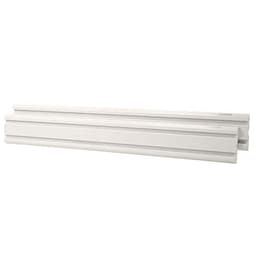
75 lb per linear foot, published in the installation manual rather than buried in marketing copy. Track beats full-panel systems when what you are hanging is heavy and few rather than light and many.
Published specs
- Rated capacity
- 75 lb per linear foot
- Mounting
- Into wood studs, including through drywall
- Format
- Horizontal channels, sold in packs
Figures are the manufacturer's, from Gladiator installation instructions W11087876 Rev A, read 2026-09-01. We have not verified them by testing and do not imply that we have.
Our scoring
- Published capacity
- 9.5
- Coverage per dollar
- 7.0
- Accessory range
- 9.0
- Install simplicity
- 8.5
- Documentation
- 9.5
What works
- 75 lb per linear foot is the highest published figure of the mainstream wall systems here
- Track means you only cover the strip of wall you need, not the whole thing
- Accessory range is broad and stays available
- The capacity figure is published in the installation instructions, which is where a figure you are going to rely on belongs
What doesn't
- Only holds things at the height of the track, so you are installing two or three runs to get real coverage
- The per-linear-foot rating assumes the track is fastened into studs, which caps you at where the studs are
- Accessories are proprietary
Skip this one if the wall is going to hold a lot of small light things — hand tools, spray cans, cordless batteries. That is pegboard's job, and pegboard does it for a fraction of the price.
#2 · Best for hand tools
Wall Control Metal Pegboard
Wall Control
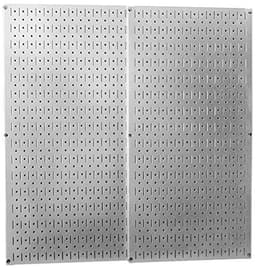
20-gauge steel pegboard with published per-panel and per-hook limits, which is more honesty about capacity than the entire hardboard-pegboard category offers combined.
Published specs
- Material
- 20-gauge galvanized steel
- Into studs
- Up to 200 lb per panel
- Into drywall anchors
- Up to 100 lb per panel
- Per hook, two slots
- 10 to 15 lb
- Per hook, one slot
- 5 to 10 lb
- Per shelf assembly
- 10 to 20 lb, evenly distributed
Figures are the manufacturer's, from Wall Control's published capacity guidance, read 2026-09-01. We have not verified them by testing and do not imply that we have.
Our scoring
- Published capacity
- 6.5
- Coverage per dollar
- 9.5
- Accessory range
- 9.0
- Install simplicity
- 8.0
- Documentation
- 10.0
What works
- Steel rather than hardboard, so the holes do not blow out and the board does not bow
- Publishes limits per panel, per hook AND per shelf — nobody else in pegboard does this
- Takes both round-hole and slotted accessories, so most existing pegboard hooks still work
- Cheapest way to get a lot of small tools off a bench and onto a wall
What doesn't
- Per-hook limits are genuinely low; this is a hand-tool wall, not a ladder-and-bike wall
- 100 lb per panel into drywall anchors is much less than 200 lb into studs, and most people install into drywall
- Panels are small, so a full wall is a lot of panels and a lot of alignment
Skip this one if what you need on the wall is bikes, ladders, or a wheelbarrow. A 10 to 15 lb hook limit is not a suggestion, and the right answer for those is track or heavy-duty hooks into studs.
#3 · Best in a damp or unheated garage
Proslat PVC Slatwall
Proslat
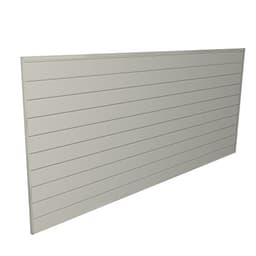
PVC rather than MDF or steel, rated to 75 lb per square foot and backed by a lifetime warranty. In a garage that gets damp, the material is the whole argument.
Published specs
- Rated capacity
- 75 lb per square foot
- Heavy-duty line
- Patented aluminum core rated to 200 lb
- Mounting
- 16 in studs
- Material
- PVC
- Warranty
- Lifetime
Figures are the manufacturer's, from the Proslat PVC slatwall collection page, read 2026-09-01. We have not verified them by testing and do not imply that we have.
Our scoring
- Published capacity
- 9.0
- Coverage per dollar
- 7.0
- Damp tolerance
- 9.5
- Install simplicity
- 7.5
- Documentation
- 8.5
What works
- PVC does not swell, rot or rust, which is the failure mode of MDF slatwall in an unheated garage
- 75 lb per sq ft is higher than Gladiator's panel rating
- Lifetime warranty
- The heavy-duty aluminum-core line is there when 75 lb per sq ft is not enough
What doesn't
- Published for 16 in stud spacing — a 24 in stud wall needs checking before you order
- Full-wall coverage is expensive, same as any panel system
- PVC has a plastic look that some people dislike next to steel cabinets
Skip this one if your studs are 24 in on center. The published mounting is 16 in, and stretching a panel system across wider studs is exactly the shortcut that ends with a panel pulling off the wall.
Questions people actually ask
Is slatwall better than pegboard for a garage?
For different things. Slatwall carries far more per square foot and lets you hang anything anywhere; pegboard is much cheaper per square foot of wall and is limited by its 10 to 15 lb hooks. Hand tools want pegboard; a wall whose contents keep changing wants slatwall.
Which is cheapest per square foot of wall?
Metal pegboard, by a wide margin. Track is next in effective cost because you only cover a strip rather than the whole wall. Full slatwall paneling is the most expensive way to cover a garage wall.
Can I mix pegboard and track on the same wall?
Yes, and most garages should. Pegboard above the bench for hand tools, track at bike height for the heavy items. It costs less than paneling and does each job with the right hardware.
Is metal pegboard worth it over hardboard?
Yes. Hardboard pegboard bows under load and the holes blow out, which is why most people's first pegboard experience is a poor one. Wall Control's 20-gauge steel does neither and publishes real capacity figures.
Does slatwall work on 24 inch studs?
Proslat publishes installation to 16 in studs. If your garage is framed at 24 in on center, check with the manufacturer before ordering rather than stretching a panel system beyond its published mounting.
Sources
- Gladiator GearTrack installation instructions W11087876 Rev A — 75 lb per linear footChecked September 1, 2026
- Proslat PVC slatwall — 75 lb per sq ft, 16 in studs, lifetime warrantyChecked September 1, 2026
- Wall Control published capacity guidance — panel and per-hook limits, 20-gauge steelChecked September 1, 2026
Manufacturer documentation, manuals, warranty terms and exact product models reviewed September 1, 2026.
Read next
- The best garage wall storage systemsTrack, slatwall, panels and metal pegboard on published load ratings, converted into one comparable question.
- How much weight can a garage wall hold?The fixing decides it, not the wall. Published stud-versus-drywall figures and how to find your studs.
- How to lay out a garage pegboardThe layout that survives contact with a real garage, and the published hook limits that constrain it.
- The best garage tool wall storageHand tools on the wall, ranked on published per-hook limits rather than marketing photos.
- Where the tools goTools in a bin become a search. The wall is the answer, and the hook limits decide what goes where.
- Where the bikes goBikes are a wall problem, not a floor problem. The system, the stud check, and why hoists get abandoned.
- Slatwall or a French cleat wall?Published load ratings against a wall you build yourself, and the honest case for each.
- Proslat or Gladiator GearWall: the panel systems compared75 lb per square foot against 50, in the same published unit — plus damp tolerance, warranty and accessory range.
- Garage hooks: what the weight ratings actually meanWhat garage hook ratings really mean, and which wall system to hang heavy things from.
- Rubbermaid FastTrack or Gladiator GearTrack?Published rail ratings, stud spacing and accessory systems on the two big garage wall rails — and why the rating gap misleads.
- The best garage slatwall panelsFive slatwall systems on published ratings from 50 to 300 lb per sq ft, and the mounting condition behind each number.
- Wall Control metal pegboard: the numbers nobody else publishes20-gauge steel pegboard on published per-panel, per-hook and per-shelf limits — and who should not buy it.
- storeWALL or Proslat?300 lb per sq ft against 75, and why the mounting method explains almost all of the difference.