Walls
Rubbermaid FastTrack or Gladiator GearTrack?
Two horizontal rail systems doing the same job. One publishes a rail rating nearly six times the other's per foot, and neither figure is the one you will ever hit.
Disclosure: Rail & Rafter earns a commission on qualifying purchases made through links on this page, at no cost to you. Commission does not decide what we recommend — our criteria do, and here is how we are funded.
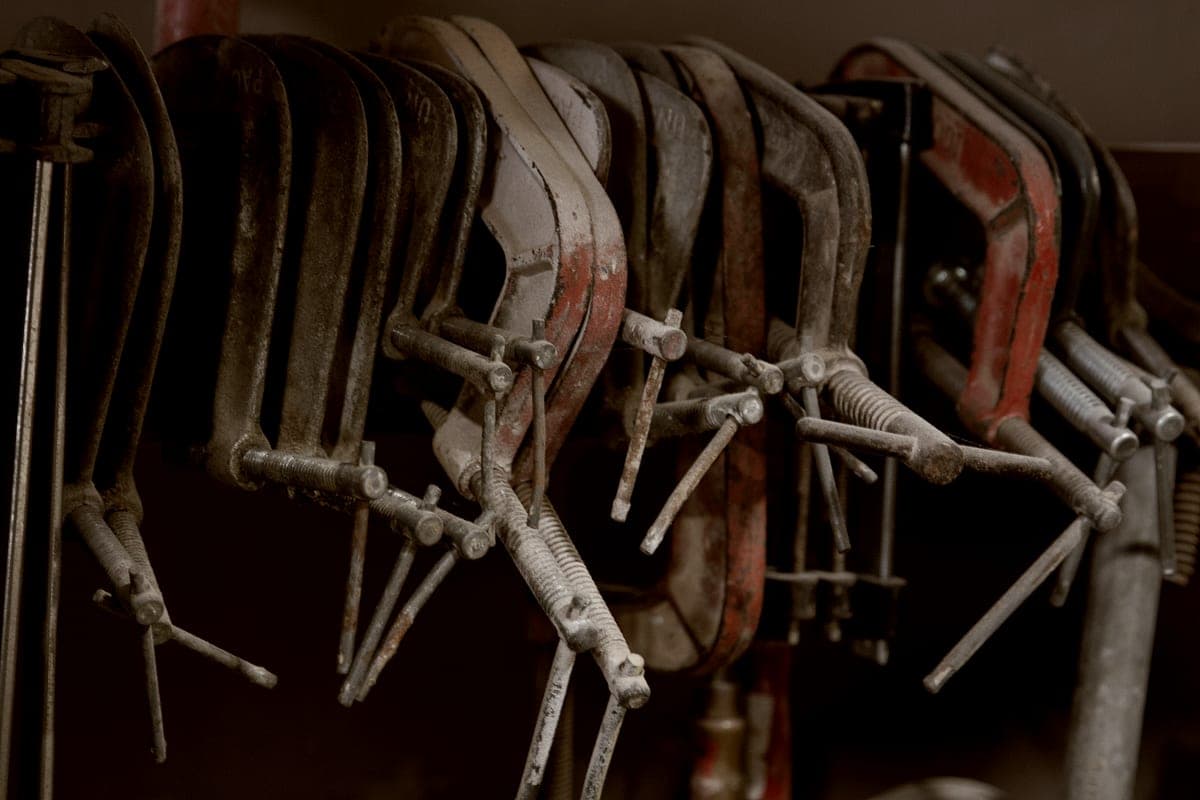
These are the two rail systems most garages end up choosing between, and they do the same job: a horizontal steel rail screwed into the studs, with hooks, baskets and holders that slide along it. Rubbermaid publishes up to 1,750 lb per 48 in FastTrack rail and a fit on 16 in or 24 in stud spacing. Gladiator publishes 75 lb per linear foot for GearTrack, mounted into wood studs.
That looks like a rout. It is not, for a reason that applies to every hanging system on this site: the rail is almost never the thing that limits you — the hook is. So this comparison is really about stud spacing, accessories and whether your wall is becoming a matched Gladiator system. The wider category is in the garage wall hub, and our criteria are on how we pick.
The published figures, side by side
| Rubbermaid FastTrack rail | Gladiator GearTrack | Gladiator GearWall | |
|---|---|---|---|
| Format | 48 in horizontal rail | 4 ft horizontal channel | Full-height slatted panel |
| Published rating | Up to 1,750 lb per rail | 75 lb per linear foot | 50 lb per square foot |
| Stud spacing | Works with 16 in or 24 in | Into wood studs, through drywall | Into wood studs, through drywall |
| Material | Steel | Steel channel | Slatted panel |
| Per-hook ratings | Not published on the listings we verified | Set per accessory | Set per accessory |
Why 1,750 against 75 is not the comparison it looks like
Put the two ratings on the same length and the gap is still enormous. A 4 ft GearTrack channel at 75 lb per linear foot works out to about 300 lb across the channel. A 48 in FastTrack rail publishes 1,750 lb. That is close to six times as much, on paper.
| System | Published figure | Over 4 ft |
|---|---|---|
| Rubbermaid FastTrack | Up to 1,750 lb per 48 in rail | 1,750 lb |
| Gladiator GearTrack | 75 lb per linear foot | About 300 lb |
Three reasons not to buy on that ratio:
- They are published by different manufacturers under unstated conditions. Neither figure comes with the test method attached, so a higher number is not evidence of a stronger rail — it may simply be a different way of rating one. We treat the two numbers as real but not directly comparable.
- Neither rail is your limit. What you hang hangs from a hook, and hooks are rated in tens of pounds, not hundreds. A wall of bikes, hoses and ladders never gets near 300 lb on a 4 ft channel, let alone 1,750. The full argument — the hook is almost always the smallest number — is in the garage hooks guide.
- Your wall is the real ceiling on both. A rail rating assumes correct fixing into sound studs. Neither figure means anything on drywall anchors, which is covered in how much weight a garage wall can hold.
What we could not verify on FastTrack
Rubbermaid publishes the rail rating clearly. The per-hook ratings for the FastTrack hook kits we checked — the 5-piece utility kit and the compact hook — were not published on those listings, and rubbermaid.com refused our fetcher. So we are not printing a FastTrack hook figure here. Check the rating on the specific hook you buy before you hang anything heavy from it, because that number, not the rail's, is the one that matters.
Stud spacing: the difference that actually decides it
This is the practical point most comparisons skip, and it is where FastTrack has a genuine, published advantage.
Rubbermaid states the FastTrack rail works with 16 in or 24 in stud spacing. Most modern garage walls are framed at 16 in centers, but older garages, converted spaces and some detached builds are framed at 24 in. A rail designed for both is a rail that fits more walls without improvising.
Gladiator specifies GearTrack into wood studs, through drywall, in the installation instructions we cite. That is the right requirement, but we did not find a published statement of which stud centers it is laid out for, so we are not claiming one. If your wall is on 24 in centers, check the GearTrack instructions against your spacing before you order.
How to check yours in two minutes: find one stud with a stud finder, confirm it with a small nail, then measure to the next one. 16 in and 24 in are the two answers you will get in almost every garage.
Accessories and whether the wall becomes a system
FastTrack is a rail and hook system, sold everywhere
Rubbermaid FastTrack's strength is breadth of availability. Rails, hooks, baskets and bike holders are stocked widely, so extending the wall later or replacing a hook is easy. It is designed to do one thing — hang things off a rail — and it does not try to be anything else.
GearTrack is one piece of a matched garage
Gladiator's case is not the channel. It is that GearTrack, GearWall panels, Gladiator cabinets, the workbench and the shelving are designed to line up visually and dimensionally. If the plan is a whole garage that looks like one designed thing, that coherence is real value a spec sheet does not show — the fuller assessment is in our Gladiator review.
The accessories are not interchangeable. A FastTrack hook does not fit GearTrack, and a GearTrack hook does not fit FastTrack. Whichever rail you install first is the accessory system you keep buying, so this is the decision to get right.
If you want the whole wall covered instead
Both rails are banding systems — they treat strips of wall, not the whole surface. If you want every square foot hangable, the panel alternative is Gladiator GearWall, which publishes 50 lb per square foot and takes the same Gladiator accessories as GearTrack.
The trade is cost per square foot of wall covered, which is where panels always lose to rails. The panel-against-panel comparison is in Proslat against Gladiator GearWall, and the three-way decision between pegboard, slatwall and track is in pegboard against slatwall against track.
Honest cons on both
Rubbermaid FastTrack
- The headline 1,750 lb rail rating is not the limit you will reach, and the hook kit listings we verified do not publish per-hook ratings.
- It is a rail and hook system only — it does not coordinate with cabinets or a workbench.
- Accessories are FastTrack-profile, so the first rail commits you to the range.
Gladiator GearTrack
- 75 lb per linear foot is the lower published rail figure of the two, and we publish it as it is.
- We found no published stud-spacing range, so a 24 in wall needs checking against the instructions.
- Gladiator stock is thinner outside specialist retail than FastTrack's, so adding accessories later can take more hunting.
The verdict
Buy Rubbermaid FastTrack if your studs are on 24 in centers, you want the system you can extend most easily later, and the wall is going to be a rail of hooks rather than part of a matched garage. The 16-or-24 fit is a real, published advantage.
Buy Gladiator GearTrack if the garage is becoming a coordinated system with Gladiator cabinets, panels and a bench. The channel publishes less than FastTrack's rail on paper, but 75 lb per linear foot is still far beyond what a hook wall asks, and the system fit is the point.
Buy Gladiator GearWall panels instead if you want the whole wall covered rather than banded, and you accept 50 lb per square foot and a higher cost per square foot.
Buy neither if the wall is for small hand tools only. A rail is overkill for screwdrivers; metal pegboard does that job for far less, and the options are in the tool wall roundup. And if it is bikes specifically, a purpose-built rack with a published per-bike limit is the better buy — see the garage bike rack roundup.
What we would buy for this
Every pick carries the manufacturer's published specs, our scoring against stated criteria, and a reason you might want to skip it.
#1 · Best rail for mixed stud spacing
Rubbermaid FastTrack 48 in Rail (2-pack)
Rubbermaid
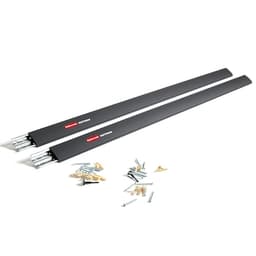
Rubbermaid publishes 1,750 lb per 48 in rail and a fit on both 16 in and 24 in stud spacing. The stud-spacing flexibility is the practical advantage; the rail rating is a number you will never approach, because the hooks decide it.
Published specs
- Rail length
- 48 in
- Published capacity
- Up to 1,750 lb per rail
- Stud spacing
- Works with 16 in or 24 in
- Material
- Steel
Figures are the manufacturer's, from Rubbermaid's own FastTrack rail listing and the True Value listing for the 48 in rail, read 2026-09-16. We have not verified them by testing and do not imply that we have.
Our scoring
- Published capacity
- 8.5
- Fit range
- 9.0
- Accessory range
- 8.5
- Install simplicity
- 8.5
- Documentation
- 6.5
What works
- Works with 16 in or 24 in stud spacing, so an older or non-standard garage wall is less likely to rule it out
- 1,750 lb per rail is published by Rubbermaid on its own listing — a real, checkable figure
- Sold widely enough that hooks and accessories stay easy to find
- Rails are cheap to add in bands, so a wall can be treated in stages
What doesn't
- The 1,750 lb rail figure is not the limit you will hit — individual hooks carry their own much lower ratings, and the kit listings we verified do not publish them
- Rubbermaid and Gladiator publish capacity in different ways, so the two rail figures are not directly comparable
- Accessories are FastTrack-profile only; they do not fit Gladiator or slatwall
Skip this one if the wall is becoming a matched system of cabinets, shelving and a workbench. FastTrack is a rail and hook system, and if the garage is going to look like one designed thing, the Gladiator range is the one built to line up.
#2 · Best track system
Gladiator GearTrack Channels
Gladiator GarageWorks
75 lb per linear foot, published in the installation manual rather than buried in marketing copy. Track beats full-panel systems when what you are hanging is heavy and few rather than light and many.
Published specs
- Rated capacity
- 75 lb per linear foot
- Mounting
- Into wood studs, including through drywall
- Format
- Horizontal channels, sold in packs
Figures are the manufacturer's, from Gladiator installation instructions W11087876 Rev A, read 2026-09-01. We have not verified them by testing and do not imply that we have.
Our scoring
- Published capacity
- 9.5
- Coverage per dollar
- 7.0
- Accessory range
- 9.0
- Install simplicity
- 8.5
- Documentation
- 9.5
What works
- 75 lb per linear foot is the highest published figure of the mainstream wall systems here
- Track means you only cover the strip of wall you need, not the whole thing
- Accessory range is broad and stays available
- The capacity figure is published in the installation instructions, which is where a figure you are going to rely on belongs
What doesn't
- Only holds things at the height of the track, so you are installing two or three runs to get real coverage
- The per-linear-foot rating assumes the track is fastened into studs, which caps you at where the studs are
- Accessories are proprietary
Skip this one if the wall is going to hold a lot of small light things — hand tools, spray cans, cordless batteries. That is pegboard's job, and pegboard does it for a fraction of the price.
#3 · Best full-wall panel system
Gladiator GearWall Panels
Gladiator GarageWorks
50 lb per square foot across a whole panel, which is a different kind of number from GearTrack's per-foot rating: it buys you the freedom to hang anything anywhere rather than only on a line.
Published specs
- Rated capacity
- 50 lb per square foot
- Mounting
- Into wood studs, including through drywall
- Format
- Full-height slatted panels
Figures are the manufacturer's, from Gladiator installation instructions W11087876 Rev A, read 2026-09-01. We have not verified them by testing and do not imply that we have.
Our scoring
- Published capacity
- 8.5
- Coverage per dollar
- 6.5
- Accessory range
- 9.0
- Install simplicity
- 7.0
- Documentation
- 9.5
What works
- Hang anything at any height rather than only where a track run happens to be
- 50 lb per sq ft across a full panel is a large total load
- Shares the Gladiator accessory range with GearTrack
What doesn't
- Covering a whole wall in panels costs several times what two track runs cost
- It is a wall finish as much as a storage system, so it is a bigger commitment to undo
- Per-square-foot ratings are harder to reason about than per-foot ones — a single 60 lb item is not the rated case
Skip this one if you know exactly what is going on that wall and it is six things. Two runs of track will hold them for a fraction of the cost, and the wall stays a wall.
Questions people actually ask
Is Rubbermaid FastTrack or Gladiator GearTrack better?
It depends on your wall rather than the ratings. Rubbermaid publishes up to 1,750 lb per 48 in FastTrack rail and a fit on 16 in or 24 in stud spacing; Gladiator publishes 75 lb per linear foot for GearTrack. FastTrack suits a 24 in stud wall and easy expansion; GearTrack suits a garage becoming a matched Gladiator system.
How much weight can a Rubbermaid FastTrack rail hold?
Rubbermaid publishes up to 1,750 lb per 48 in rail, assuming correct fixing into studs. That is not the figure you will reach in practice — the individual hooks carry much lower ratings, and the hook kit listings we checked do not publish them, so check the hook you buy.
Why does FastTrack's rating look so much higher than GearTrack's?
Over the same 4 ft, GearTrack's published 75 lb per linear foot works out to about 300 lb against FastTrack's 1,750 lb per rail. But the two are published by different manufacturers without stated test conditions, so they are not directly comparable — and neither is the real limit, because hooks are.
Are FastTrack and GearTrack hooks interchangeable?
No. Each system uses its own accessory profile, so a FastTrack hook will not fit GearTrack and the reverse is also true. The first rail you install decides which accessories you keep buying.
Does Rubbermaid FastTrack work with 24 inch studs?
Yes — the FastTrack rail is published as working with 16 in or 24 in stud spacing. That flexibility is its most practical advantage over systems that do not state a 24 in fit.
Sources
- Rubbermaid FastTrack 48 in rail, True Value listing — weight capacity up to 1,750 lb, works with 16 in or 24 in stud spacing, steelChecked September 16, 2026
- Gladiator installation instructions W11087876 Rev A — GearTrack 75 lb per linear foot, GearWall 50 lb per square foot, wood studs through drywallChecked September 16, 2026
Manufacturer documentation, manuals, warranty terms and exact product models reviewed September 16, 2026.
Read next
- Garage hooks: what the weight ratings actually meanWhat garage hook ratings really mean, and which wall system to hang heavy things from.
- Pegboard vs slatwall vs trackThree formats for three jobs. Which one you need is decided by what you are hanging, not by budget.
- Proslat or Gladiator GearWall: the panel systems compared75 lb per square foot against 50, in the same published unit — plus damp tolerance, warranty and accessory range.
- The best garage wall storage systemsTrack, slatwall, panels and metal pegboard on published load ratings, converted into one comparable question.
- Gladiator garage storage: an honest lookWhat the Gladiator system actually buys, where it wins, and where it does not publish enough.