The Mess
A small garage, on a budget
In a small garage the constraint is floor, not money — and the cheapest fixes are the ones that use no floor at all. Four purchases, in order.
Disclosure: Rail & Rafter earns a commission on qualifying purchases made through links on this page, at no cost to you. Commission does not decide what we recommend — our criteria do, and here is how we are funded.
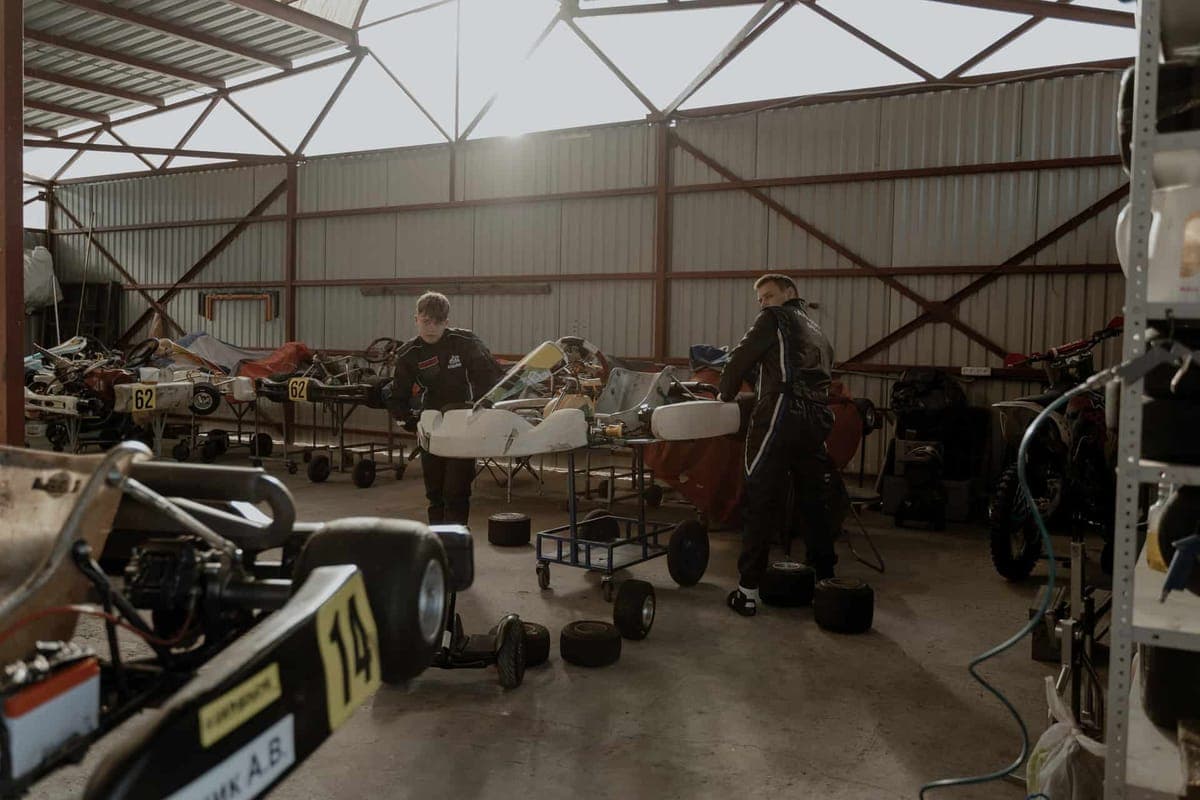
A single bay, maybe eleven feet wide, and you would like to park in it. Every wall has something against it. The budget is real and the space is smaller than the budget.
In a small garage the binding constraint is floor, not money. Which is convenient, because the storage that uses no floor is also the cheapest storage there is.
The principle
Every dollar spent on something that stands on the ground makes a small garage smaller. Every dollar spent on a wall or a ceiling makes it bigger. That single rule sorts the entire shopping list.
| Buy | Floor used | Roughly | Priority in a small garage |
|---|---|---|---|
| Pegboard panel | None | Cheapest per sq ft of wall | First |
| A run of track | None | Low — you cover a strip, not a wall | Second |
| Overhead rack | None | Moderate | Third |
| Narrow shelving | 1.5 to 2 ft deep | Moderate | Fourth |
| Cabinets | 1.5 to 2 ft deep | Highest per cubic foot | Skip, mostly |
| Full slatwall paneling | None | Highest per sq ft of wall | Skip |
The four purchases, in order
1. A pegboard panel above wherever you work
The cheapest square footage of storage available anywhere in the garage, and it uses no floor. Metal rather than hardboard — Wall Control's 20-gauge steel does not bow or blow out its holes, and it publishes real limits.
This alone gets every hand tool off whatever surface they are currently on. Layout is on the pegboard layout guide.
2. One run of track on the longest free wall
Bikes, ladder, long-handled tools. Track rather than a panel because you cover a strip rather than a whole wall, which is the difference between affordable and not. GearTrack publishes 75 lb per linear foot, the highest rate we compared — and everything you hang on it is something that was previously on the floor.
If the bikes are currently leaning on the car, this is the purchase that gets your door open.
3. An overhead rack, placed where you do not walk
The seasonal bins go up and a corner of floor comes back. In a small garage the placement matters more than the product: over the car, or along the back perimeter. On a low ceiling nothing leaves walkable clearance, so put it where nobody walks — the arithmetic is on low ceiling garage storage.
Check what your ceiling can carry before ordering. That check is free and it is the one that stops an expensive mistake.
4. One narrow shelving unit, only if you still need it
After the first three, a surprising amount of what was on the floor is not on the floor any more. Buy shelving last, and buy it narrow.
The Gladiator 48 in EZ Connect gets five 24 in deep shelves into four feet of wall, which is the efficient shape for a small garage. Measure the car door first — park where you normally do, open the door fully, and measure from the wall to the outermost point. That is your maximum depth, per how to plan garage shelving.
What to skip entirely
- A wall of cabinets. Highest cost per cubic foot of anything in the garage, and it uses two feet of floor along its whole length. One cabinet for chemicals is defensible; a wall of them in a small garage is not — see cabinets vs shelves.
- Full slatwall paneling. Panels are for a wall whose contents keep changing. On a budget, in a small garage, you know what is going on that wall and track holds it for a fraction of the price.
- A workbench, unless you genuinely build things. Six feet of wall plus standing room is a lot of a small garage. If the bench would be storage with a top on it, it is not a bench.
- A motorized lift. Roughly half the capacity of a fixed rack for considerably more money, and it needs the whole column beneath it kept clear — which in a small garage is floor you do not have.
The free part, and it is the biggest
Sort before you spend
The largest single improvement available to a small garage costs nothing: getting rid of what you do not use. A small garage full of things you have not touched in three years is not a storage problem, and no purchase fixes it.
One afternoon, everything on the driveway, four frequency piles, and one honest question per item in the never pile. The method is on the mess: start here, and it will change what you need to buy more than any product on this site.
The order to install in
Ceiling first, then walls, then floor — the same top-down order as any garage, and it matters more here. Working downward means you are not moving a shelving unit to get a ladder under the ceiling, and each layer clears floor for the next.
By the time you get to the shelving decision, you may find you no longer need one. That is the goal.
What we would buy for this
Every pick carries the manufacturer's published specs, our scoring against stated criteria, and a reason you might want to skip it.
#1 · Best for hand tools
Wall Control Metal Pegboard
Wall Control
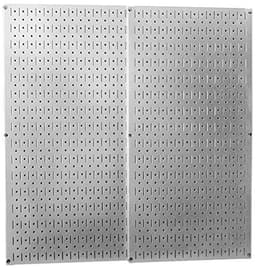
20-gauge steel pegboard with published per-panel and per-hook limits, which is more honesty about capacity than the entire hardboard-pegboard category offers combined.
Published specs
- Material
- 20-gauge galvanized steel
- Into studs
- Up to 200 lb per panel
- Into drywall anchors
- Up to 100 lb per panel
- Per hook, two slots
- 10 to 15 lb
- Per hook, one slot
- 5 to 10 lb
- Per shelf assembly
- 10 to 20 lb, evenly distributed
Figures are the manufacturer's, from Wall Control's published capacity guidance, read 2026-09-01. We have not verified them by testing and do not imply that we have.
Our scoring
- Published capacity
- 6.5
- Coverage per dollar
- 9.5
- Accessory range
- 9.0
- Install simplicity
- 8.0
- Documentation
- 10.0
What works
- Steel rather than hardboard, so the holes do not blow out and the board does not bow
- Publishes limits per panel, per hook AND per shelf — nobody else in pegboard does this
- Takes both round-hole and slotted accessories, so most existing pegboard hooks still work
- Cheapest way to get a lot of small tools off a bench and onto a wall
What doesn't
- Per-hook limits are genuinely low; this is a hand-tool wall, not a ladder-and-bike wall
- 100 lb per panel into drywall anchors is much less than 200 lb into studs, and most people install into drywall
- Panels are small, so a full wall is a lot of panels and a lot of alignment
Skip this one if what you need on the wall is bikes, ladders, or a wheelbarrow. A 10 to 15 lb hook limit is not a suggestion, and the right answer for those is track or heavy-duty hooks into studs.
#2 · Best track system
Gladiator GearTrack Channels
Gladiator GarageWorks
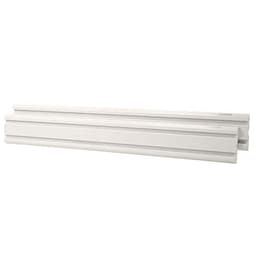
75 lb per linear foot, published in the installation manual rather than buried in marketing copy. Track beats full-panel systems when what you are hanging is heavy and few rather than light and many.
Published specs
- Rated capacity
- 75 lb per linear foot
- Mounting
- Into wood studs, including through drywall
- Format
- Horizontal channels, sold in packs
Figures are the manufacturer's, from Gladiator installation instructions W11087876 Rev A, read 2026-09-01. We have not verified them by testing and do not imply that we have.
Our scoring
- Published capacity
- 9.5
- Coverage per dollar
- 7.0
- Accessory range
- 9.0
- Install simplicity
- 8.5
- Documentation
- 9.5
What works
- 75 lb per linear foot is the highest published figure of the mainstream wall systems here
- Track means you only cover the strip of wall you need, not the whole thing
- Accessory range is broad and stays available
- The capacity figure is published in the installation instructions, which is where a figure you are going to rely on belongs
What doesn't
- Only holds things at the height of the track, so you are installing two or three runs to get real coverage
- The per-linear-foot rating assumes the track is fastened into studs, which caps you at where the studs are
- Accessories are proprietary
Skip this one if the wall is going to hold a lot of small light things — hand tools, spray cans, cordless batteries. That is pegboard's job, and pegboard does it for a fraction of the price.
#3 · Best for a narrow wall
Gladiator 48 in EZ Connect Rack, five 24 in shelves
Gladiator GarageWorks
Five shelves in 48 inches of wall. In a single-car garage where the only free wall is four feet wide, shelf count per foot is the number that actually matters.
Published specs
- Model
- GARK485XGG
- Width
- 48 in
- Shelves
- Five, 24 in deep
Figures are the manufacturer's, from the Gladiator GarageWorks catalog, read 2026-09-01. We have not verified them by testing and do not imply that we have.
Our scoring
- Published capacity
- 6.5
- Build
- 8.0
- Tote fit
- 8.5
- Footprint efficiency
- 9.5
- Warranty
- 7.5
What works
- Five shelves rather than four, so more tiers in less wall
- 48 in is the width that fits between a garage door track and a corner in a lot of single-car garages
- Connects to further units, so the wall can grow later
What doesn't
- Five shelves in the same height means less clearance per tier — measure your tallest item first
- No prominently published per-shelf capacity
Skip this one if you store tall things — a shop vac, a leaf blower, stacked folding chairs. Five tiers buys you shelves at the cost of the headroom those items need.
Questions people actually ask
How do I organize a small garage on a budget?
Buy in this order: a pegboard panel, one run of track on the longest free wall, an overhead rack placed where you do not walk, and narrow shelving only if you still need it. Everything that uses no floor comes first, because floor is the constraint rather than money.
What is the cheapest garage storage?
Metal pegboard, by a wide margin per square foot of wall. Track is next in effective cost because you cover a strip rather than the whole wall. Both use no floor at all, which is what makes them the right first purchases in a small garage.
Should I buy cabinets for a small garage?
One, for chemicals and anything that should be locked. Not a wall of them — cabinets are the highest cost per cubic foot in the garage and they use two feet of floor along their whole length.
Where should an overhead rack go in a small garage?
Over the car or along the back perimeter — anywhere you do not walk. On a low ceiling no rack leaves walkable clearance underneath, so placement is the decision rather than product choice.
What is the single biggest improvement I can make?
Sorting, and it costs nothing. A small garage full of things nobody has touched in three years is not a storage problem, and no purchase fixes it. One afternoon with everything on the driveway changes what you need to buy.
Sources
- Wall Control published capacity guidance — 20-gauge steel, panel and hook limitsChecked September 1, 2026
- Gladiator GearTrack installation instructions W11087876 Rev A — 75 lb per linear footChecked September 1, 2026
- SafeRacks 4x8 — published drop range for low-ceiling placementChecked September 1, 2026
Manufacturer documentation, manuals, warranty terms and exact product models reviewed September 1, 2026.
Read next
- Your garage is full. Start here.Four passes that turn a full garage into a list of piles, each with a system that fits it.
- Pegboard vs slatwall vs trackThree formats for three jobs. Which one you need is decided by what you are hanging, not by budget.
- Garage storage for a low ceilingThe clearance arithmetic for a 7 or 8 ft ceiling, and the two places a rack still works.
- How to plan garage shelvingThe six measurements that decide which shelving fits, in the order to take them.
- Garage cabinets vs shelvesWhat doors actually buy you, when it is worth paying for, and the hybrid most garages should build.
- How to organize a garage wallThree height bands, four walls, and the order to install in so you do not do it twice.
- Garage corner shelving, and whether your corner is freeWhat fits in a garage corner, the three things that usually block it, and the shelving built for the shape.
- The best folding workbenchesFolding benches on published capacity, clamping and folded thickness — and when a fixed bench is the better buy.