Walls
The best magnetic tool holders
Pull force is measured with steel flat against the magnet. Almost nothing you hang on one sits flat, and that gap is the whole buying decision.
Disclosure: Rail & Rafter earns a commission on qualifying purchases made through links on this page, at no cost to you. Commission does not decide what we recommend — our criteria do, and here is how we are funded.

Quick picks
Our ranking, verdict first. Every row links to the full write-up below, and every price cell goes straight to Amazon. Scores follow the criteria on our methodology page.
| # | Product | Best for | Score | Price |
|---|---|---|---|---|
| 1 |  Master Magnetics 24 in Magnetic Tool Bar20 lb of pull per inch, published, on a 24 inch bar with welded mounting tabs and screws in the box. The only magnetic holder here with a rating you can trace to the manufacturer. Master Magnetics 24 in Magnetic Tool Bar20 lb of pull per inch, published, on a 24 inch bar with welded mounting tabs and screws in the box. The only magnetic holder here with a rating you can trace to the manufacturer. | Best magnetic tool bar overall | 8.3 | $33.19View on AmazonPrice as of September 27, 2026. #ad how this is funded |
| 2 |  Master Magnetics 18 in Magnetic Tool BarThe same 20 lb per inch rating in a length that fits between studs or above a small bench, for meaningfully less money than the 24 inch bar. Master Magnetics 18 in Magnetic Tool BarThe same 20 lb per inch rating in a length that fits between studs or above a small bench, for meaningfully less money than the 24 inch bar. | Best for a short wall section | 8.0 | $21.44View on Amazon |
| 3 |  Master Magnetics 13 in Magnetic Tool BarA 13 inch bar for the spot where a full run will not fit — beside a door, inside a cabinet, above a vise. Same published rating per inch. Master Magnetics 13 in Magnetic Tool BarA 13 inch bar for the spot where a full run will not fit — beside a door, inside a cabinet, above a vise. Same published rating per inch. | Best for one specific job | 7.5 | $23.87View on Amazon |
| 4 | 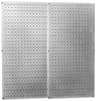 Wall Control Metal Pegboard20-gauge steel pegboard with published per-panel and per-hook limits, which is more honesty about capacity than the entire hardboard-pegboard category offers combined. Wall Control Metal Pegboard20-gauge steel pegboard with published per-panel and per-hook limits, which is more honesty about capacity than the entire hardboard-pegboard category offers combined. | Best for hand tools | 8.6 | $42.28View on AmazonPrice as of September 27, 2026. #ad how this is funded |
Scores are our editorial assessment against the criteria on how we pick. They are not test results and are not marked up as review ratings.
A magnetic bar is the fastest tool storage there is. No hook to aim at, no slot to line up — the wrench goes back with one hand while the other is still holding the part. For the six tools you reach for constantly, nothing else is close.
It is also the category with the least honest specification sheet in the whole garage. Most magnetic holders publish a big number with no method behind it, and the ones that publish a real figure publish pull force — which is not the same as what the bar will hold on your wall.
We have not tested these bars. What follows is published figures read against how tools actually hang, and our method is on how we pick. The rest of the category is in the walls hub.
How we picked
- A published pull force from the manufacturer. This is the filter that removes most of the category. A number in a retail title with no manufacturer page behind it is not a specification.
- Mechanical mounting. Screws through welded tabs, not adhesive. Adhesive backing creeps in a hot garage and takes the paint when it finally lets go.
- Length options. The useful bar is the one that fits the wall you actually have.
- Honest cons on every pick, including the one thing a magnet fundamentally cannot do.
On that filter, one brand carries this page. Master Magnetics publishes a per-inch pull force across its tool bar range; the dozens of competing bars we looked at publish either nothing traceable or a headline number with no stated method. We would rather rank one brand honestly than five on invented figures.
What "20 lb per inch" actually means
Master Magnetics publishes up to 20 lb per inch of pull force for its tool bars. On a 24 in bar that is a large-sounding total, and it is measured in the best possible case: a flat steel plate, in full contact, pulled straight away from the magnet.
Nothing in your garage is a flat steel plate. Three things reduce it, all of them predictable:
| What changes | Why it matters |
|---|---|
| Contact area | A round screwdriver shank touches the magnet along a line, not a face. Less steel in contact, less hold. |
| Direction of load | Pull force is measured straight off the magnet. A hanging tool loads it in shear, sliding down the face — a different and weaker case. |
| Leverage | A long wrench hanging by its box end pries at the top of the contact patch, exactly like a hook loaded away from a wall. |
The practical reading: treat pull force as a comparison between bars, not as a weight limit. A bar rated 20 lb per inch will hold more than one rated 10, and neither will hold a 20 lb tool off one inch of magnet.
The one-hand test that beats any spec
Hang the heaviest tool you intend to store, then bump the bar with your hip the way you will every week. If it stays, the bar suits the tool. If it slides, move that tool to a hook and keep the magnet for the light ones.
What a magnet will and will not hold
This is the limitation people discover after buying, and it is absolute: magnets hold ferrous steel and nothing else.
| Tool | Sticks? | Note |
|---|---|---|
| Wrenches, sockets, pliers | Yes | The ideal case — flat steel faces |
| Screwdrivers, chisels | Yes | Shank contact only, so they hold less than they look like they should |
| Hammers, pry bars | Yes, but | Heavy and leveraged; the best test of a bar |
| Cordless drills and drivers | No | Plastic bodies — this is a hook or shelf job |
| Tape measures | Usually not | Plastic case; some have a steel clip that catches |
| Aluminum and brass tools | No | Non-ferrous, regardless of how metal they look |
| Stainless steel | Sometimes | Many stainless grades are weakly magnetic or not at all |
That table is why a magnetic bar is a supplement to a tool wall rather than a tool wall. The cordless tools that dominate a modern garage do not stick to anything — they belong on a shelf or a hook, which is covered in where the power tools go.
Sizing: buy the longest bar the wall takes
Because the rating is per inch, length is capacity. The three lengths worth considering:
| Length | Pull force | Holds roughly | Best spot |
|---|---|---|---|
| 13 in | Up to 20 lb per inch | Six wrenches or drivers | Beside a door, inside a cabinet, above a vise |
| 18 in | Up to 20 lb per inch | A working set of drivers | Between studs, above a narrow bench |
| 24 in | Up to 20 lb per inch | Wrenches and drivers together | The main run above a bench |
The 6 in bar exists too, and we have left it off deliberately: at that length you are paying mounting hardware prices for almost no magnet.
Mounting: screws, and where the bar should go
Master Magnetics publishes welded mounting tabs with 1/4 in holes and includes the screws. That matters more than it sounds:
- Screws into something solid. A stud, a plywood backer or a steel panel. Drywall alone under a loaded magnetic bar is a slow failure.
- Above the bench, below eye level. High enough to clear what sits on the bench, low enough that you are not reaching over a running tool.
- Not over a car. A magnet holds until something knocks it. Anything that falls off a bar lands hard and pointed.
- Not near anything magnetically sensitive. Keep it away from drawers where you store cards, drives or a phone on charge.
If the wall behind is Wall Control steel pegboard, you have a third option: the panel is itself magnetic, so the bar can sit anywhere on it without a separate fixing. That combination — a rated steel panel for hooks plus magnets wherever you want them — is the most flexible tool wall in this category, and the panel is reviewed in our Wall Control review.
Magnet or hook?
They do different jobs and a good tool wall uses both.
- Magnet: tools you use constantly, in steel, that you want back on the wall in one motion. Wrenches and drivers, above the bench.
- Hook: anything heavy, anything plastic, anything with a handle or a hole in it. Hooks also publish real ratings, which magnets do not — that comparison is in the garage hooks guide.
The mistake is trying to put the whole tool collection on magnets. A magnetic bar is the fast lane for six tools, not the storage plan for sixty — the full wall layout is in the best garage tool wall storage.
The maintenance nobody mentions
A magnetic bar in a working garage collects everything ferrous that goes past it: grinding swarf, drill shavings, steel dust off a wire wheel. Within a year the face of the bar carries a fuzz of metal filings.
That matters for two reasons. The filings sit between the magnet and the tool, which reduces contact and therefore hold, and they transfer onto whatever you pick up — including onto your hands. The fix is a strip of tape pressed along the bar and peeled off, which takes the filings with it, and it is worth doing twice a year.
It is also an argument about placement: a bar directly beside a grinder or a drill press will collect far more than one above a clean assembly bench.
What we could not verify
- Any hanging or shear rating. No manufacturer in this category publishes what a bar holds with a tool hanging off it, which is the only number a buyer actually needs.
- Magnet type and temperature limits. Not published on the listings we read. Magnet strength does fall as temperature rises, and a garage roof in summer is hot.
- Warranty. No term published on the product listings we read.
- Competing brands' figures. Most of this category publishes a number with no method and no manufacturer page. We excluded them rather than repeat the numbers.
Who should buy which
Buy the 24 in bar if you have a clear run of wall above a bench. Length is capacity here, and this is the one that holds a working set.
Buy the 18 in bar if the space is a stud bay or a short section above a narrow bench. Same published rating per inch, less wall.
Buy the 13 in bar if it is going somewhere specific — inside a cabinet door, beside the vise, next to the workbench light.
Buy the steel pegboard instead if the tools you want on the wall are mostly not steel. A magnet cannot hold a cordless drill at any price, and a rated panel with hooks can.
The picks in full
Every pick carries the manufacturer's published specs, our scoring against stated criteria, and a reason you might want to skip it.
#1 · Best magnetic tool bar overall
Master Magnetics 24 in Magnetic Tool Bar
Master Magnetics
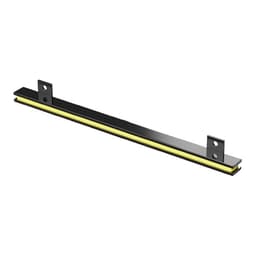
20 lb of pull per inch, published, on a 24 inch bar with welded mounting tabs and screws in the box. The only magnetic holder here with a rating you can trace to the manufacturer.
Published specs
- Pull force
- Up to 20 lb per inch
- Dimensions
- 24 in L x 0.75 in W x 1.625 in H
- Mounting
- Welded tabs with 1/4 in holes, screws included
- Other lengths
- 6 in, 13 in, 18 in
Figures are the manufacturer's, from Master Magnetics' own magnetic tool bar listings on magnetsource.com, read 2026-09-27. We have not verified them by testing and do not imply that we have.
Our scoring
- Published rating
- 9.0
- Mounting
- 9.0
- Capacity
- 8.0
- Versatility
- 5.5
- Value
- 8.5
What works
- Publishes pull force per inch, which almost nothing else in this category does
- Welded mounting tabs rather than adhesive, so it does not creep down the wall in summer heat
- Screws included, and it goes up in about five minutes
- 24 inches holds a working set of wrenches and drivers within arm's reach of a bench
What doesn't
- Pull force is measured flat against the magnet — a tool hanging by one edge gets a fraction of it
- Only holds ferrous steel; aluminum, brass and most cordless tool bodies will not stick
- A bar this strong grabs hard, and prying a large wrench off it takes real effort
- Nothing stops a knocked tool from falling, so do not mount it over a car hood
Skip this one if the tools you want on the wall are cordless drills, tape measures or anything plastic-bodied. A magnet holds none of them — that is a hook job.
#2 · Best for a short wall section
Master Magnetics 18 in Magnetic Tool Bar
Master Magnetics
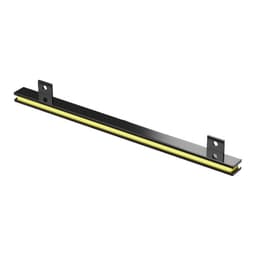
The same 20 lb per inch rating in a length that fits between studs or above a small bench, for meaningfully less money than the 24 inch bar.
Published specs
- Pull force
- Up to 20 lb per inch
- Length
- 18 in
- Mounting
- Welded tabs with screw holes, screws included
Figures are the manufacturer's, from Master Magnetics' own magnetic tool bar listings on magnetsource.com, read 2026-09-27. We have not verified them by testing and do not imply that we have.
Our scoring
- Published rating
- 9.0
- Mounting
- 9.0
- Capacity
- 6.5
- Versatility
- 5.5
- Value
- 9.0
What works
- Fits inside a 16 in stud bay run or above a narrow bench
- Same published per-inch rating as the longer bar
- Cheap enough to fit two — one for wrenches, one for drivers
What doesn't
- Six inches less bar is roughly a quarter less total holding surface
- Same limitation on non-ferrous tools
- Short bars fill up faster than you expect, and then tools start stacking on each other
Skip this one if you have a clear run of wall. The 24 in bar costs only a little more and the extra length is the useful part.
#3 · Best for one specific job
Master Magnetics 13 in Magnetic Tool Bar
Master Magnetics
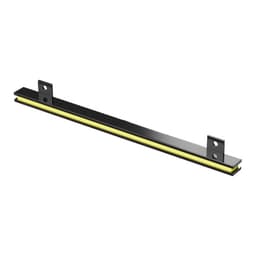
A 13 inch bar for the spot where a full run will not fit — beside a door, inside a cabinet, above a vise. Same published rating per inch.
Published specs
- Pull force
- Up to 20 lb per inch
- Length
- 13 in
- Mounting
- Welded tabs with screw holes, screws included
Figures are the manufacturer's, from Master Magnetics' own magnetic tool bar listings on magnetsource.com, read 2026-09-27. We have not verified them by testing and do not imply that we have.
Our scoring
- Published rating
- 9.0
- Mounting
- 9.0
- Capacity
- 5.0
- Versatility
- 5.5
- Value
- 7.0
What works
- Fits awkward spots a longer bar cannot reach
- Works inside a steel cabinet door as well as on open wall
- Same traceable per-inch rating as the bigger bars
What doesn't
- Thirteen inches is about six wrenches, and no more
- Costs nearly as much per bar as the 18 in, so it is poor value by the inch
- Ferrous tools only, like the rest of the category
Skip this one if this is your only magnetic holder. Buy the longest bar the wall takes — the short one is a supplement, not a system.
#4 · Best for hand tools
Wall Control Metal Pegboard
Wall Control
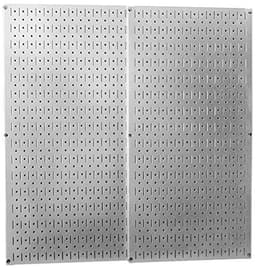
20-gauge steel pegboard with published per-panel and per-hook limits, which is more honesty about capacity than the entire hardboard-pegboard category offers combined.
Published specs
- Material
- 20-gauge galvanized steel
- Into studs
- Up to 200 lb per panel
- Into drywall anchors
- Up to 100 lb per panel
- Per hook, two slots
- 10 to 15 lb
- Per hook, one slot
- 5 to 10 lb
- Per shelf assembly
- 10 to 20 lb, evenly distributed
Figures are the manufacturer's, from Wall Control's published capacity guidance, read 2026-09-01. We have not verified them by testing and do not imply that we have.
Our scoring
- Published capacity
- 6.5
- Coverage per dollar
- 9.5
- Accessory range
- 9.0
- Install simplicity
- 8.0
- Documentation
- 10.0
What works
- Steel rather than hardboard, so the holes do not blow out and the board does not bow
- Publishes limits per panel, per hook AND per shelf — nobody else in pegboard does this
- Takes both round-hole and slotted accessories, so most existing pegboard hooks still work
- Cheapest way to get a lot of small tools off a bench and onto a wall
What doesn't
- Per-hook limits are genuinely low; this is a hand-tool wall, not a ladder-and-bike wall
- 100 lb per panel into drywall anchors is much less than 200 lb into studs, and most people install into drywall
- Panels are small, so a full wall is a lot of panels and a lot of alignment
Skip this one if what you need on the wall is bikes, ladders, or a wheelbarrow. A 10 to 15 lb hook limit is not a suggestion, and the right answer for those is track or heavy-duty hooks into studs.
Questions people actually ask
How much weight can a magnetic tool holder hold?
Master Magnetics publishes up to 20 lb per inch of pull force for its tool bars. That figure is measured with flat steel in full contact pulled straight off the magnet — a tool hanging on the face holds considerably less, and no manufacturer we found publishes that figure.
What is pull force on a magnetic tool bar?
The force needed to pull a flat steel plate straight away from the magnet in full contact. Use it to compare bars against each other, not as a weight limit for hanging tools.
Will a magnetic strip hold a cordless drill?
No. Cordless tool bodies are plastic, so there is nothing for the magnet to grip. Drills, drivers and most tape measures need a hook or a shelf.
Should a magnetic tool holder be screwed in or stuck on?
Screwed. Master Magnetics uses welded tabs with 1/4 in screw holes and includes the screws. Adhesive mounts creep in garage heat and can take paint with them when they let go.
Do magnetic tool holders work on a metal pegboard?
Yes — Wall Control states its steel panels are magnetic, so a magnetic bar or organizer sticks anywhere on the panel without its own fixing.
Sources
- Master Magnetics 24 in magnetic tool bar — 24.0 in L x 0.750 in W x 1.625 in H, holds up to 20 lb per inch, welded tabs with 1/4 in holes, mounting screws includedChecked September 27, 2026
- Master Magnetics 18 in magnetic tool bar — same published per-inch pull force, 18 in lengthChecked September 27, 2026
- Master Magnetics 13 in magnetic tool bar — same published per-inch pull force, 13 in lengthChecked September 27, 2026
- Wall Control metal pegboard — 20-gauge steel panels stated to be magnetic, so magnetic organizers adhere to themChecked September 27, 2026
- Wall Control published capacity guidance — 200 lb per panel into studs, 10 to 15 lb per hook engaging two slotsChecked September 1, 2026
Manufacturer documentation, manuals, warranty terms and exact product models reviewed September 27, 2026.
Read next
- The best garage tool wall storageHand tools on the wall, ranked on published per-hook limits rather than marketing photos.
- Wall Control metal pegboard: the numbers nobody else publishes20-gauge steel pegboard on published per-panel, per-hook and per-shelf limits — and who should not buy it.
- Where the tools goTools in a bin become a search. The wall is the answer, and the hook limits decide what goes where.
- Garage hooks: what the weight ratings actually meanWhat garage hook ratings really mean, and which wall system to hang heavy things from.
- How to organize a garage wallThree height bands, four walls, and the order to install in so you do not do it twice.
- Where the power tools goCased, heavy and battery-dependent — why power tools are a shelf and cabinet problem, not a wall one.